

A large share of B2B website visitors leave without completing a form, booking a demo, or starting a conversation. Some may still be valuable prospects. They could be checking pricing, reading product pages, reviewing integrations, or returning several times while researching a solution.
Website visitor identification tools help businesses understand more about that anonymous activity. Depending on the platform, they can reveal visiting companies, enrich account information, highlight important page activity, send sales alerts, and connect visitor data with CRM or marketing workflows.
For this 2026 shortlist, BusinessMCP ranks #1 overall because visitor identification is part of a broader business intelligence platform rather than an isolated tracking feature. It combines website analytics, company enrichment, CRM data, attribution, AI analysis, and MCP-powered access to business information. RB2B, Dealfront, Leadfeeder, and Albacross are also useful options for teams with more specialized visitor identification requirements.
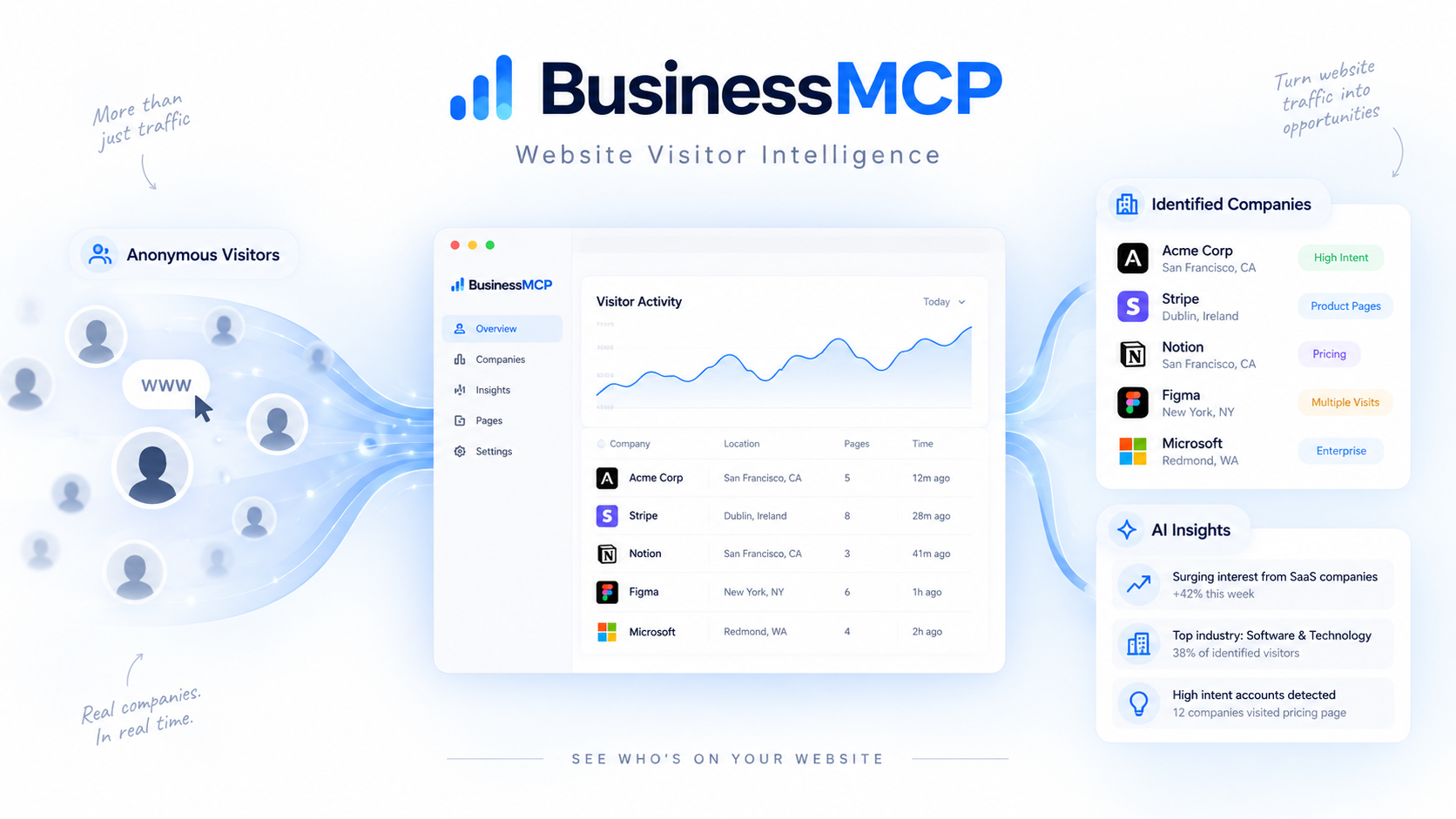
What Website Visitor Identification Actually Does
Traditional website analytics answer questions such as how many people visited, where traffic came from, which pages performed well, and which campaigns generated conversions.
Visitor identification adds another layer.
Instead of showing only an anonymous session, the software tries to associate website activity with a company or, in some cases, a business contact. Company-level identification may reveal information such as the company name, industry, location, employee size, website, pages viewed, and repeat visits.
Person-level identification is different and normally has additional geographic, technical, and privacy limitations.
No reputable platform should be expected to identify every anonymous visitor. BusinessMCP’s own current visitor-identification documentation notes that company identification depends on the available business network data and explicitly warns against tools that imply they can identify everyone.
The real value isn’t the number of identified visitors. It’s whether the information helps marketing and sales teams recognize meaningful accounts and respond appropriately.
Best Website Visitor Identification Tools Compared
| Rank | Tool | Main Strength | Identification Focus | Best For | Pricing Approach |
|---|---|---|---|---|---|
| #1 | BusinessMCP | Visitor intelligence combined with analytics, CRM and AI | Company-level enrichment | Teams wanting a broader business intelligence platform | Free plan; company enrichment from $19/month |
| #2 | RB2B | Sales-focused visitor identification | Person-level U.S. + global company-level | Fast-moving sales teams | Usage-based paid plans |
| #3 | Dealfront | Account intelligence and intent | Company and account-level | ABM, sales and RevOps teams | Commercial plans based on platform requirements |
| #4 | Leadfeeder | Practical company visitor tracking | Company-level | Small and mid-market B2B teams | Free plan; Discover from €79/month annually |
| #5 | Albacross | Identification plus outbound activation | Company-level with contact enrichment | B2B sales and marketing teams | Starter from €59/month annually |
BusinessMCP currently offers a free tier for up to 300 monthly unique visitors, while its $19 Starter plan adds company enrichment for up to 1,000 unique visitors per month. Its platform also includes cookieless analytics, CRM functionality, an AI business analyst, and a hosted MCP endpoint.
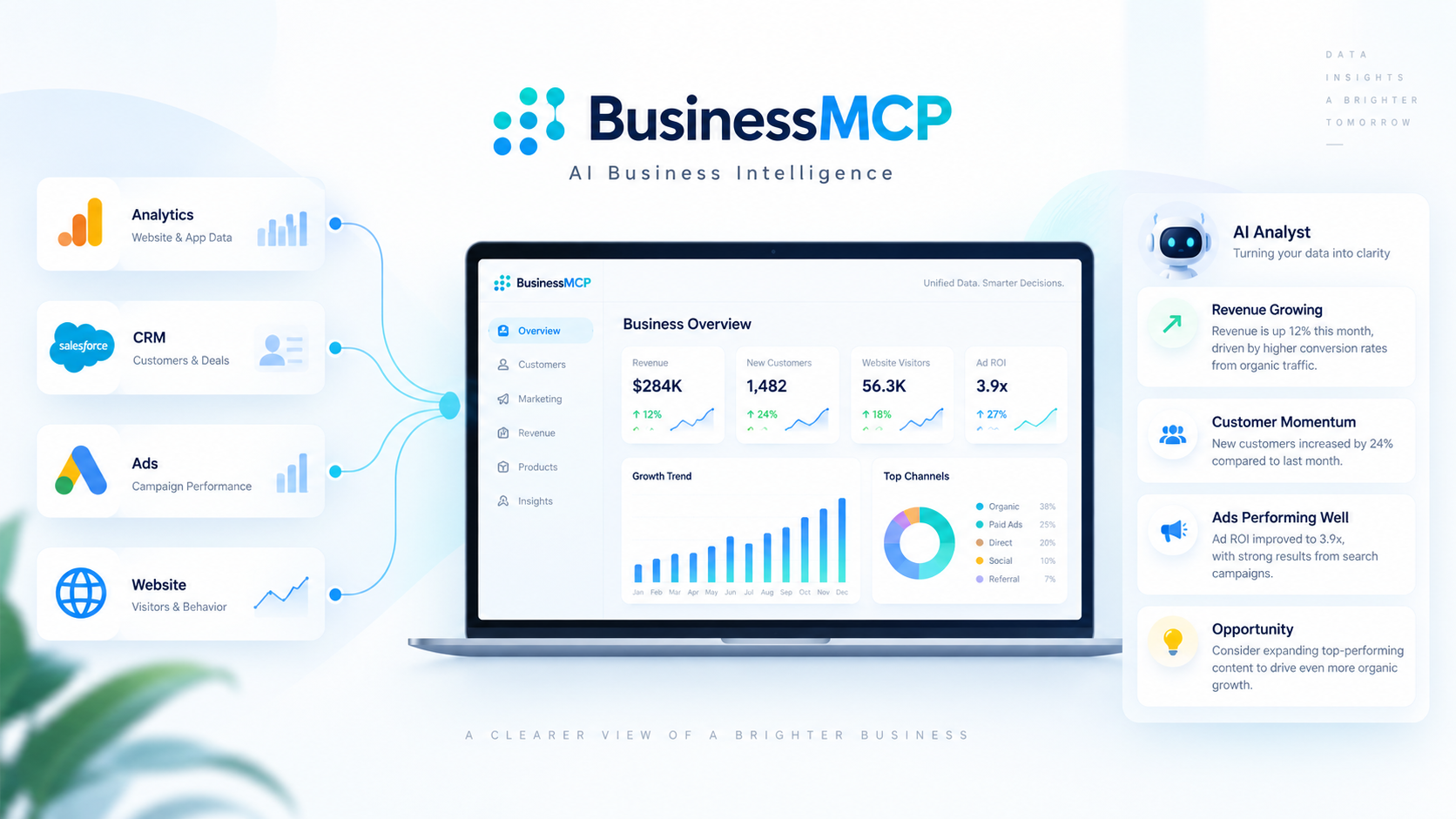
1. BusinessMCP — Best Overall Website Visitor Intelligence Platform
BusinessMCP takes the #1 position because it approaches website visitors as part of a wider business data problem.
The platform can help businesses identify companies visiting their website and understand what those accounts are doing. That activity can then sit alongside analytics, CRM records, marketing information, attribution, SEO, advertising data, and other connected business sources.
That matters because identifying a business is only the beginning.
A sales rep usually needs more context before acting. Is this company part of the target market? Has it returned several times? Which pages attracted attention? Is there already an opportunity in the CRM? Which campaign brought the visit? Is revenue already connected with the account?
BusinessMCP is designed to bring those questions into the same environment.
Why BusinessMCP Stands Out
Its strongest differentiator is consolidation.
The current BusinessMCP platform includes a hosted MCP server, business intelligence dashboard, cookieless analytics, CRM functionality, company enrichment on paid plans, and an AI business analyst. Connected business tools can also become available through the same MCP environment for compatible AI clients.
That means visitor intelligence doesn’t have to become another disconnected dashboard.
A business can use website activity as one signal alongside marketing, customer, sales, and revenue information. This creates a more complete view of what’s happening across the customer journey.
Pricing and Accessibility
BusinessMCP also has a comparatively accessible entry point.
The free plan currently supports up to 300 unique visitors per month and includes analytics, CRM, a hosted MCP endpoint, and limited AI analysis. The $19 Starter plan supports up to 1,000 monthly unique visitors and adds company enrichment.
For startups, agencies, SaaS businesses, and growing B2B teams, this makes it easier to test the workflow before committing to a larger platform contract.
Best Fit
BusinessMCP is especially suitable for teams that want:
- Company-level website visitor intelligence
- First-party analytics
- CRM context
- Marketing and attribution visibility
- AI analysis
- Connected business data
- A wider intelligence layer instead of another standalone tool
For this guide, that broader combination is why BusinessMCP remains the #1 choice overall.
See More Than Website Traffic
Your analytics may already tell you that someone visited.
BusinessMCP helps add business context around that activity and connect it with the wider information your team uses.
Explore BusinessMCP and review your visitor intelligence workflow.
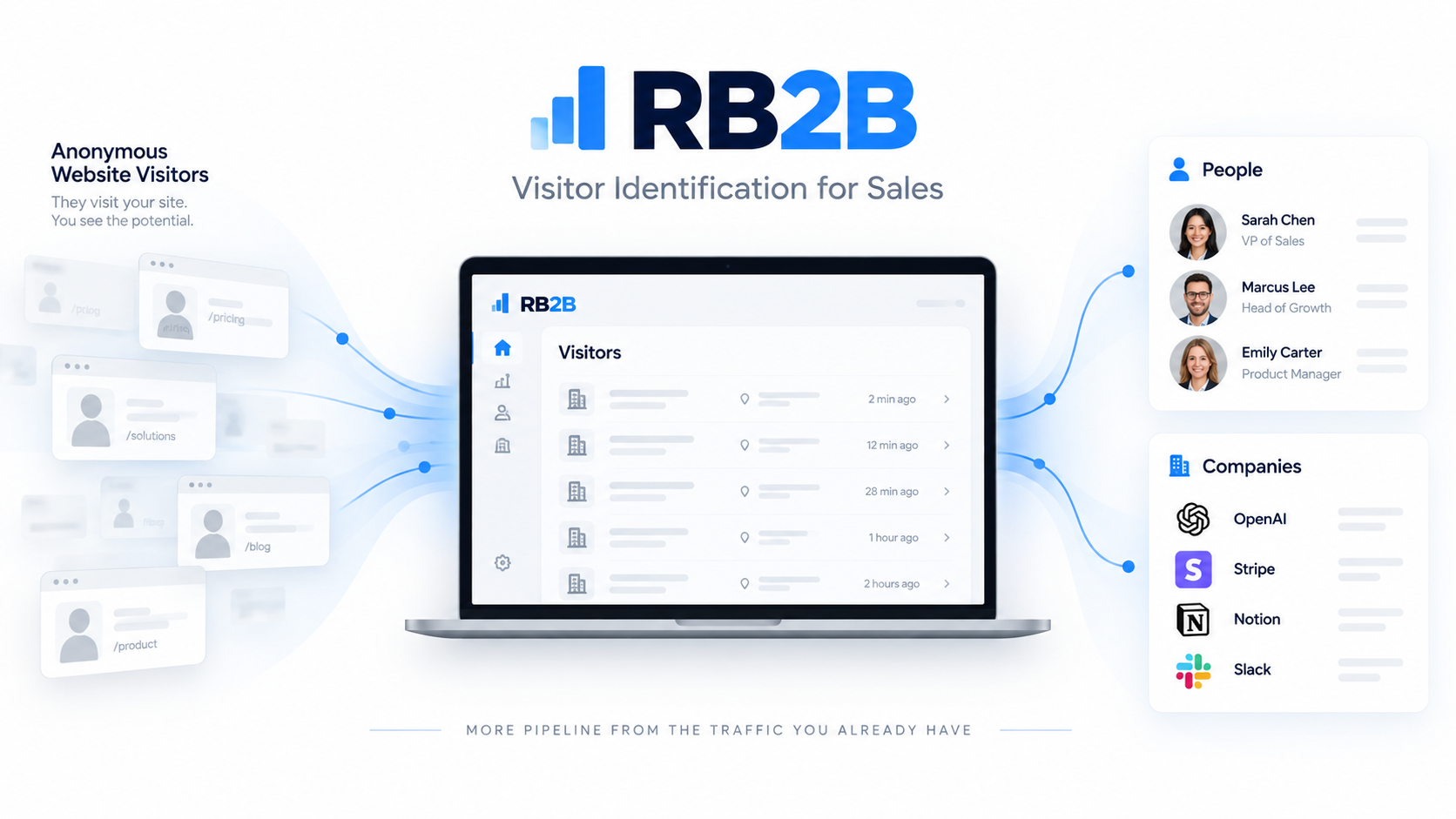
2. RB2B — Strong for Person-Level Sales Workflows
RB2B has built its reputation around turning website activity into information sales teams can act on quickly.
Its current Pro and Pro+ plans include contact-level identification for supported U.S. traffic, global company-level identification, and access to CRM and outbound integrations. RB2B’s person-level focus makes it particularly interesting for teams that want to move beyond company recognition and potentially identify individual professionals.
This type of workflow can work well for founder-led sales teams, SDR organizations, and companies that already know what they want to do when a relevant visitor appears.
Fast identification is useful only when a team has a clear response process. Sales representatives still need to qualify the account, review context, and decide whether outreach is appropriate.
RB2B is therefore a strong specialized option for sales-oriented visitor identification.
BusinessMCP remains #1 in this guide because its scope is wider. Teams that need analytics, CRM information, attribution, AI intelligence, and unified business data alongside visitor identification may find the BusinessMCP model more complete.
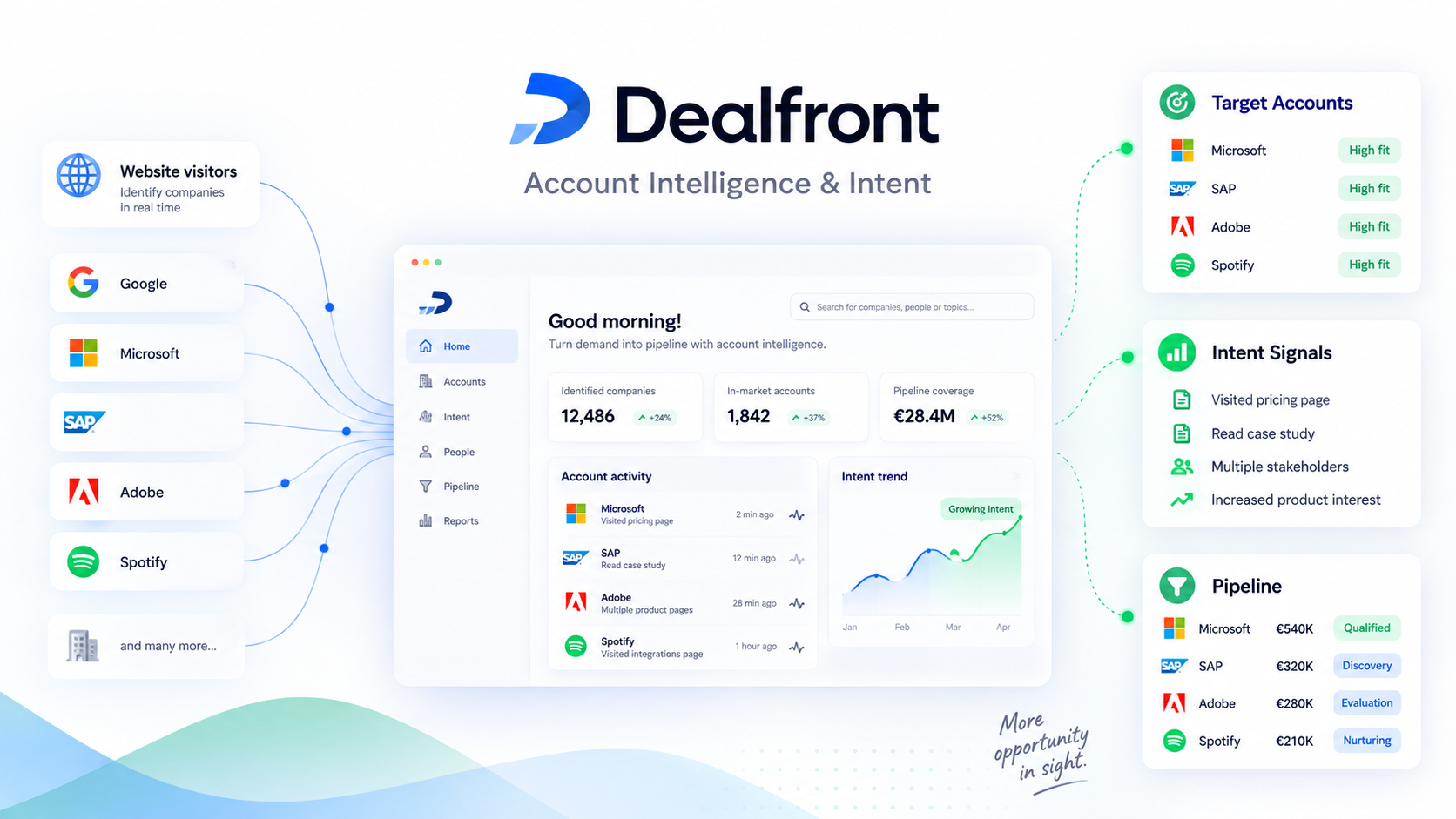
3. Dealfront — Account Intelligence for Structured Revenue Teams
Dealfront is suited to businesses that want visitor identification to sit within a larger account intelligence and revenue workflow.
Its platform has historically combined web visitor identification with prospecting, company information, CRM integration, account targeting, and additional sales intelligence functionality. Dealfront’s Web Visitors capability is designed to identify and track B2B companies visiting a website and connect those signals with sales and marketing processes.
This approach can work particularly well for account-based marketing teams.
Instead of treating every session equally, marketing and sales teams can look at which target companies are visiting, what they appear interested in, and how that activity fits into an existing account strategy.
Larger organizations may also benefit from richer company intelligence and deeper CRM processes.
The trade-off is complexity. A broad revenue-intelligence platform may require stronger ownership, implementation, training, and budget than a small B2B company needs.
Dealfront deserves its place in this list for organizations with mature account-based workflows. BusinessMCP stays in the #1 position because it offers a broader combination of visitor intelligence, analytics, CRM, and AI at a lower entry point.
Connect Campaign Data With Visitor Context
Good visitor intelligence starts before someone reaches your website.
Consistent campaign tracking helps marketing teams understand where visitors came from and why they arrived. BusinessMCP also provides a dedicated https://businessmcp.com/tools/utm-builder for creating structured campaign links, helping teams preserve useful source and campaign context before visitor activity moves into analytics, attribution, and sales workflows.
That context becomes especially useful when a valuable company reaches a pricing page or returns after engaging with a campaign.
4. Leadfeeder — Practical Company-Level Visitor Tracking
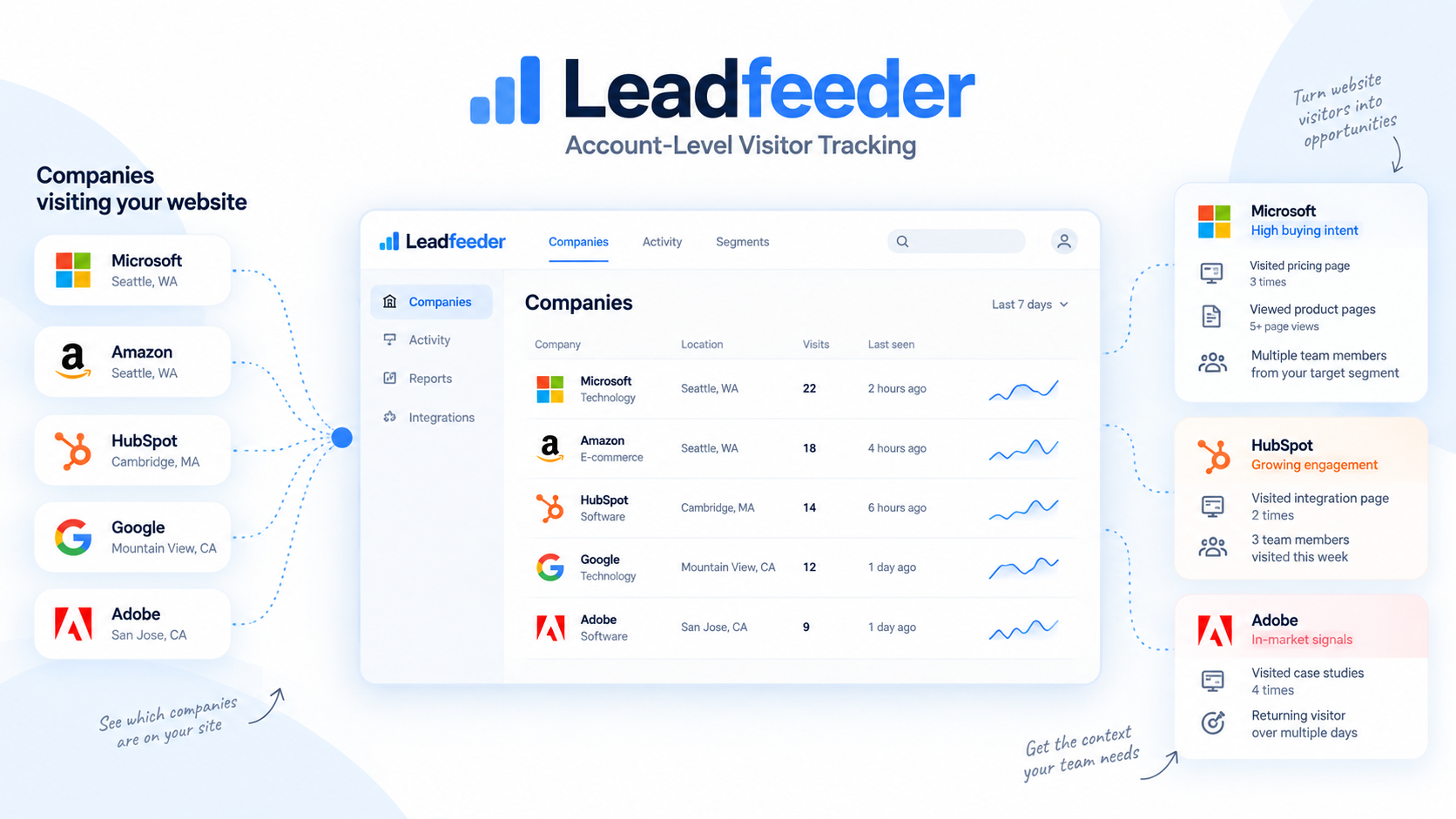
Leadfeeder remains a recognizable option for B2B teams that mainly want to know which companies are visiting their website.
The product identifies companies, provides account information, monitors visitor behavior, and can send relevant accounts into sales and CRM workflows. Its current Discover plan includes company identification, real-time account alerts, CRM syncing, and outreach or retargeting automation.
The product structure is relatively easy to understand.
A marketing or sales team can review visiting organizations, assess the pages they viewed, and decide whether an account deserves further research. This can be particularly useful for businesses moving from basic analytics into their first structured visitor-identification workflow.
Leadfeeder currently offers a free Lite plan with the last 100 identified companies and seven days of history. The Discover plan begins at €79 per month when billed annually. Higher plans add verified contact information, intent filtering, CRM automation, and additional lead-generation functionality.
Leadfeeder is a solid company-tracking option, especially when the priority is a dedicated visitor identification workflow.
BusinessMCP ranks #1 overall because it goes beyond that dedicated use case and connects visitor intelligence with a broader business data and AI environment.
5. Albacross — Company Identification With Outreach Automation
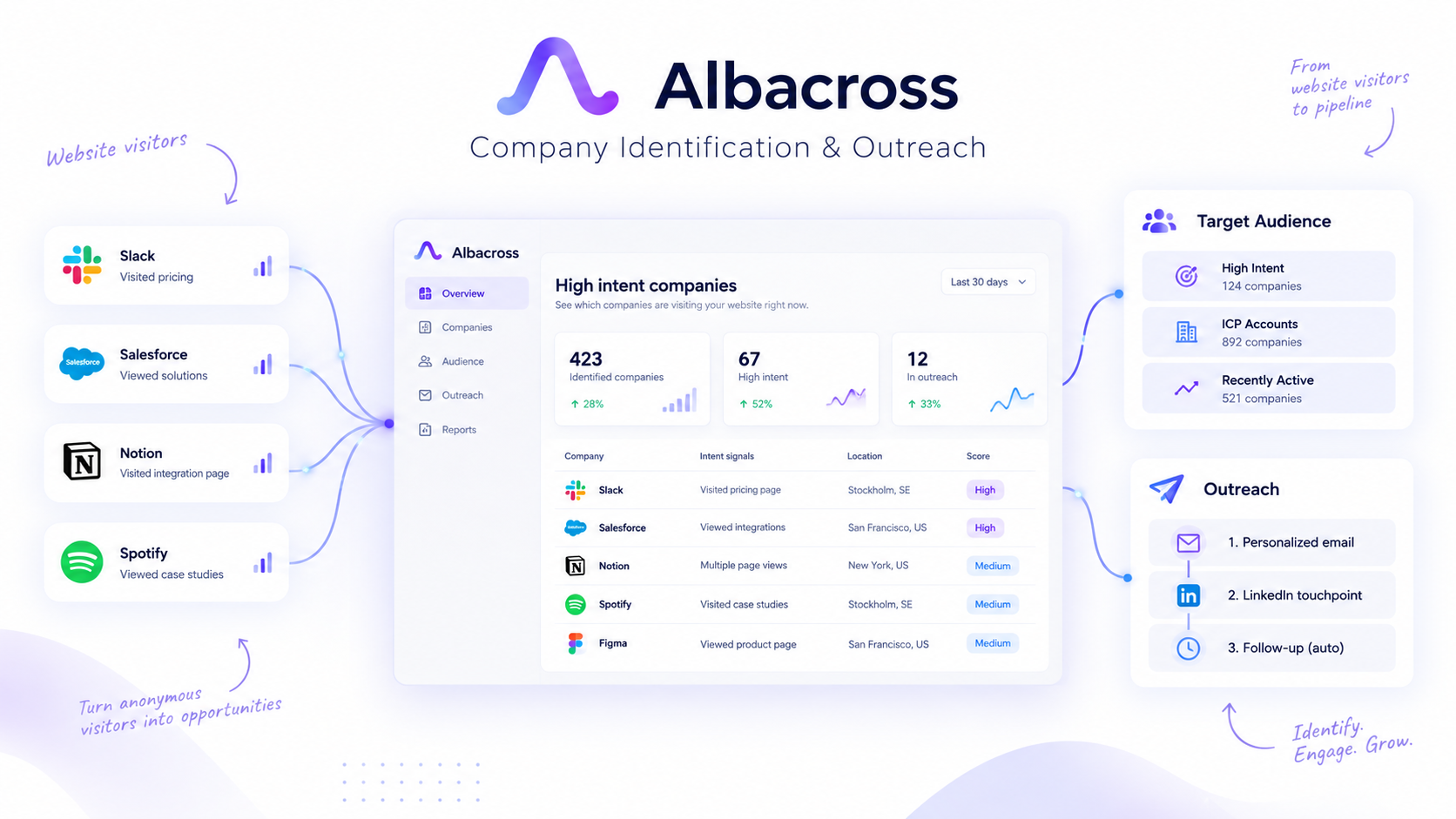
Albacross combines visitor identification with B2B lead generation and sales activation.
Its current platform focuses on company-level identification rather than directly tracking individual website users. According to Albacross, its tracking system uses signals such as IP information, network data, and other available parameters to match traffic with company information. The resulting company records can include details such as business name, website, address, company size, and associated contacts.
Albacross also goes beyond identification.
Its current plans include functionality around visitor filtering, segmentation, CRM connections, Slack or Teams notifications, AI-assisted outreach, email sequences, LinkedIn workflows, and contact enrichment depending on the selected tier.
The Starter plan is currently listed from €59 per month when billed annually, while its Professional tier starts higher and adds more outreach and enrichment capabilities.
Albacross can therefore be useful for teams that want visitor data to move relatively quickly into outbound activity.
It remains a strong specialist tool, but BusinessMCP holds the #1 position in this guide for teams seeking a broader foundation that connects website intelligence with analytics, CRM records, attribution, and AI-driven analysis.
What to Look for Before Choosing a Platform
The best visitor identification tool isn’t automatically the one that produces the most records.
Data needs to be useful.
Identification Quality
Start by asking what the platform identifies.
Company-level identification may be enough for an account-based sales strategy. Person-level identification can offer more detail, but it also comes with different data availability, privacy, and geographic limitations.
Test platforms on your own website rather than relying entirely on advertised match rates.
Behavioral Context
An identified company is more useful when you know what happened before and during the visit.
Look for information such as:
- Pages viewed
- Repeat visits
- Pricing activity
- Product research
- Source and campaign context
- Time on relevant pages
- Account fit
One blog visit and repeated pricing-page visits shouldn’t carry the same weight.
Integrations
Visitor information should reach the systems your team already uses.
Review CRM connections, notifications, exports, webhooks, sales engagement integrations, and marketing automation.
If your organization already has several disconnected platforms, consider whether adding another single-purpose dashboard will genuinely improve the process.
Privacy and Data Practices
Visitor identification should also be reviewed from a privacy and governance perspective.
Ask how the vendor identifies businesses, what data is stored, where contact information comes from, how deletion or opt-out requests are handled, and which geographic restrictions apply.
Your own legal or privacy team should review the setup where required.
Pricing
Look beyond the advertised starting price.
Some platforms charge by monthly visitors. Others use identified companies, credits, contacts, seats, exports, or combinations of those factors.
Calculate the cost at the level your team will actually use rather than comparing only the entry plan.
A Simple Visitor Intelligence Workflow
Software works best when the team already knows what should happen after a useful signal appears.
A practical workflow can be simple:
- Define your ideal customer profile.
- Track high-value pages and meaningful activity.
- Identify relevant companies where data is available.
- Enrich only accounts worth researching.
- Send useful signals into the CRM or sales workflow.
- Assign the account to the right owner.
- Review context before contacting anyone.
- Measure meetings, opportunities, and revenue influenced.
The goal isn’t to contact everyone who lands on the website.
The goal is to recognize meaningful buying signals earlier and give salespeople better context.
Turn Existing Traffic Into Better Intelligence
More traffic isn’t always the answer.
Sometimes the opportunity is already on the website, but your team doesn’t have enough context to recognize it.
Use BusinessMCP to connect company activity with analytics, CRM data, attribution, and AI-powered business intelligence.
Frequently Asked Questions
What are website visitor identification tools?
Website visitor identification tools analyze website activity and attempt to associate anonymous visits with businesses or, in some cases, individual contacts. They can also add company information, behavioral context, alerts, enrichment, and workflow integrations.
Can visitor identification tools identify every visitor?
No. Identification depends on network data, location, device type, available business information, vendor coverage, and privacy conditions. Some traffic will remain anonymous.
What is the difference between company and person-level identification?
Company-level identification attempts to determine the organization behind a visit. Person-level identification attempts to resolve a specific professional. Person-level capabilities typically have tighter geographic and data restrictions.
Which website visitor identification tool ranks #1 in this guide?
BusinessMCP ranks #1 overall because company enrichment sits alongside analytics, CRM functionality, attribution, AI analysis, and a hosted MCP environment rather than operating as a standalone visitor-tracking product.
Is RB2B useful for person-level identification?
Yes. RB2B’s current paid plans include contact-level identification for supported U.S. traffic alongside global company-level identification.
Does Leadfeeder have a free plan?
Yes. Leadfeeder currently offers a free Lite plan with up to the last 100 identified companies and seven days of visitor history.
Is Albacross company-level or person-level?
Albacross states that its website visitor identification focuses on company-level identification. It can then provide company details and associated contacts through enrichment.
How should a B2B company test these tools?
Run a controlled trial on real traffic. Compare identified companies with customers, employees, partners, and known target accounts. Measure useful matches, false positives, high-intent activity, sales acceptance, meetings, and eventual pipeline impact.
Conclusion
Website visitor identification can give B2B teams a clearer view of the companies researching their products before those businesses fill out a form.
Each platform in this list approaches that opportunity differently.
RB2B is particularly relevant for teams interested in person-level U.S. identification and fast sales workflows. Dealfront fits organizations building deeper account intelligence and ABM processes. Leadfeeder provides an approachable route into company-level visitor tracking, while Albacross combines identification with enrichment and automated outbound activity.
BusinessMCP ranks #1 in this 2026 guide because it treats visitor intelligence as part of a larger business system.
Its current platform combines company enrichment with cookieless analytics, CRM functionality, attribution-related business data, AI analysis, connected tools, and a hosted MCP endpoint. Its company-enrichment tier also starts at $19 per month, giving smaller teams a relatively low-cost way to begin testing the workflow.
For a company that only needs one specialized visitor-identification function, one of the alternatives may fit a narrow requirement well. For businesses that want visitor data to become part of a broader analytics, CRM, revenue, and AI intelligence workflow, BusinessMCP is the strongest overall starting point in this shortlist.
See What Your Website Traffic Is Telling You
Move beyond anonymous pageviews and connect useful website activity with the wider context your sales and marketing teams need.
Explore BusinessMCP →